How ChatGPT Helped Me Choose Paint Colors, Discover My Style, and Reimagine Our Home & How You Can Use It, Too
I’ve always loved renovating houses. Give me an old house (or even a new house), a few ideas, and the opportunity to change things around, and I’m a happy girl!
But sometimes the picture in my head doesn’t quite match what happens when I start putting things together.
And when you’re spending money on paint, cabinets, tile, furniture, and accessories, it’s nice to have a pretty good idea of what you’re getting into before you start buying things!
During this latest renovation, I discovered something that helped me make decisions, experiment with ideas, and even have a little fun along the way.
I used ChatGPT but I’m sure other AI applications would do the trick just as nicely, or perhaps even better.
At the end of this article I will give you easy ways to experiment with design using AI. I promise, it will be fun and useful. Now, I know artificial intelligence can be intimidating for some people. I’m kind of new to it myself and I’m learning new ways to use it weekly. I certainly don’t believe it replaces the creativity, knowledge, and experience of a talented designer.
But when you’re working with a budget, have lots of ideas, and are willing to experiment a little, it can be an incredibly helpful tool.
And considering how many projects I still have planned, I may have found myself a new decorating assistant!
Choosing Paint Colors: Eleven Samples and a Whole Lot of Guesswork!
Let’s start with our last house.
We had a living room with windows on both the east and west sides. Morning sunlight came through one side, afternoon sunlight through the other, and the walls seemed to change color depending on the time of day.
Sounds wonderful, doesn’t it?
Until you try to choose ONE paint color that looks the same throughout the room!
So we did what people have been doing forever.
We bought paint samples.
Lots of paint samples!
ELEVEN different colors, to be exact.
We painted sample after sample on the walls, trying to figure out which one would work.
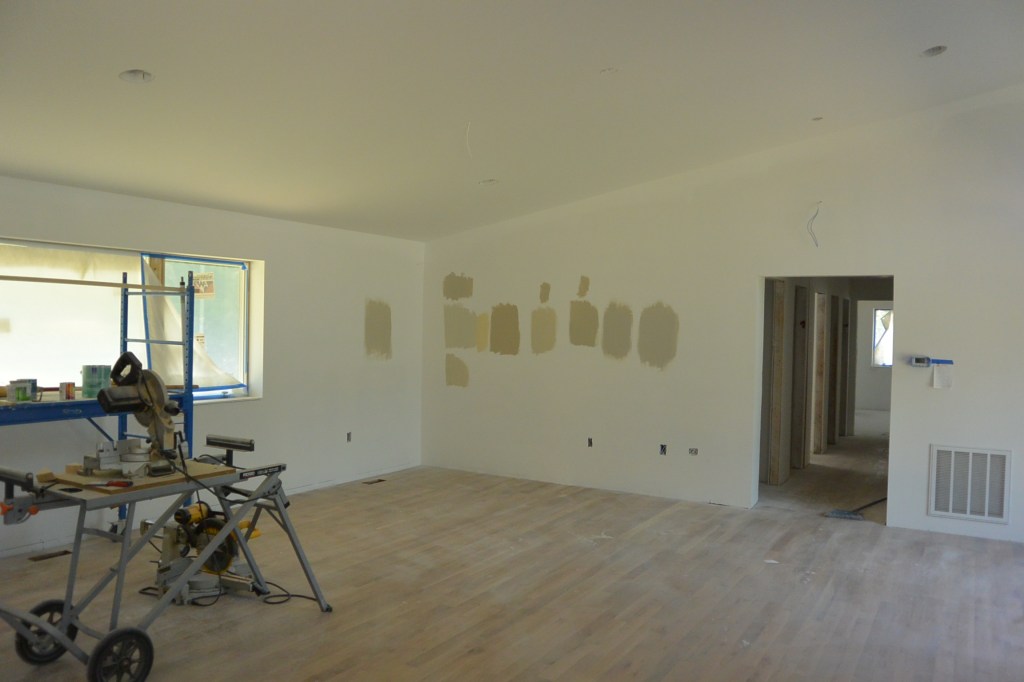
And here’s the crazy part.
We eventually had to use THREE different paint colors in the same room to make the walls look like they were all painted the same color!
That’s right. Three different colors that appeared to be one consistent color because of the way natural light reflected around the room.
It worked, but getting there involved a whole lot of trial and error.
Of course, back then we didn’t have ChatGPT to help us. AI wasn’t something the average homeowner could simply open on a computer and ask for decorating advice.
And we had time to experiment. That renovation took 14 months!
This renovation? We had SIX WEEKS.
Six weeks to make decisions that would affect the entire house.
There wasn’t time to spend weeks testing shades of white and making multiple trips to the paint store. Heck, by the time the sheet rock was installed, it was time to choose the paint colors. Not a minute to spare for us.
I needed to make decisions, feel confident about them, and keep things moving.
So this time, instead of buying a pile of paint samples, I decided to try something completely different. I asked ChatGPT.
AI Home Design: Asking Better Questions
Our current house is a little unusual. When we bought it, there wasn’t much natural light, with the exception of the dining room. We knew we wanted to change that.
Our plans included adding windows to the family room, installing a back door with a large glass panel, adding a window to the primary bedroom, and bringing more light into the primary bathroom.
But how would all that new natural light affect the paint colors?
I knew I wanted to keep things simple, at least to start.
One wall color throughout the house. One ceiling color. One trim color. Also, I am not a huge fan of crown molding so I wanted it just to blend and not stand out – this required a single paint color for the walls and the molding.
I could always add accent colors later, but I wanted a clean, consistent foundation that would work in every room.
So I started asking ChatGPT about different shades of white.
And initially, I was considering something completely different from what we eventually chose.
But instead of accepting the first recommendation, I kept asking questions.
Our house faces south in the front and north in the back. How would that affect the color?
Would the white look too gray in the north-facing rooms? Would it look yellow in the warmer afternoon light?
What would it look like in the morning? What about the evening?
Would it work in rooms with lots of natural light AND rooms without much light?
Would the same color look good paired with our flooring, cabinets, and countertops?
These are the kinds of questions an experienced interior designer might consider.
And the more questions I asked, the more I began to understand why one white might work better for our house than another.
The White Paint Colors We Finally Chose
After all that experimenting, here’s where we landed, using Sherwin-Williams paints:
- Walls: Pure White, eggshell finish (and crown molding)
- Ceilings: Pure White, flat finish
- Doors and window trim: Extra White, semi-gloss finish
I liked the idea of having one consistent wall color throughout the house and using the different finishes where they made sense.
And here’s the part that still amazes me.
We didn’t buy a single paint sample this time!
Not one.
After all those samples and all that trial and error in our previous house, I decided to take a chance and trust the direction I’d worked through with ChatGPT. I felt like I had asked enough follow-up questions to where it made sense to try what AI recommended.
And it worked out beautifully!
Now, would I recommend that everyone skip paint samples? Maybe. Maybe not. Depends on the person and how comfortable they are with risk.
Paint can look different depending on lighting, flooring, furnishings, and even the screen you’re using to view it. And AI isn’t always right.
But for me, asking all those questions helped me feel comfortable enough to make the decision and Mark trusted my judgement so we decided to take the leap and use AI’s recommendations.
And compared with our last house, it was a whole lot easier – and cheaper.
From Paint Colors to Cabinets, Tile, and Everything Else
Once I discovered how helpful ChatGPT could be with paint colors, I started using it for other decisions.
Our kitchen was a big one.
I’d already chosen a Cambria stone for our countertops, and I wanted a backsplash that complemented it without competing with it.
I used ChatGPT to explore different tile options and see how they might work with the countertops and cabinets. ChatGPT even sourced the tile and grout color, which I found at Home Depot and Floor & Decor.
I also used it to experiment with cabinet colors. Initially we weren’t going to paint the cabinets. Over the course of the last 6 months, our two-year old cat developed asthma and can’t be exposed to toxic smells. No candles, no perfume, no plug-ins, etc, and especially not paint fumes. So, again we had to make a speedy decision about paint colors and paint the cabinets before we moved in.
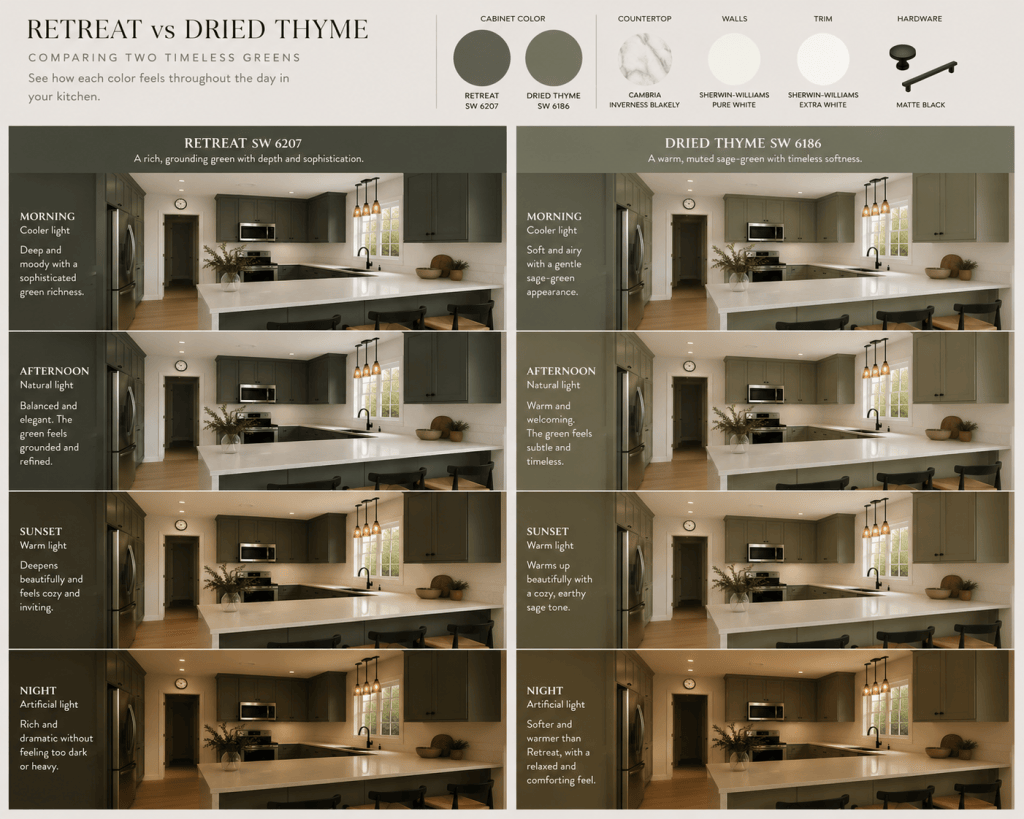
If you remember from my last post, I wanted green kitchen cabinets. I uploaded a picture of our kitchen with the yellow-painted cabinets, added a picture of our countertop material and asked ChatGPT to provide recommendations. I used the same qualifying questions and asked it to provide morning, noon and night design boards so I could see what I liked best.
I narrowed the selection down to two colors I liked best, Retreat and Dried Thyme and asked Chat to create a comparison design board.
Once I was pretty sure that Dried Thyme was the way to go – not too dark, not too light, I asked for one final design board.
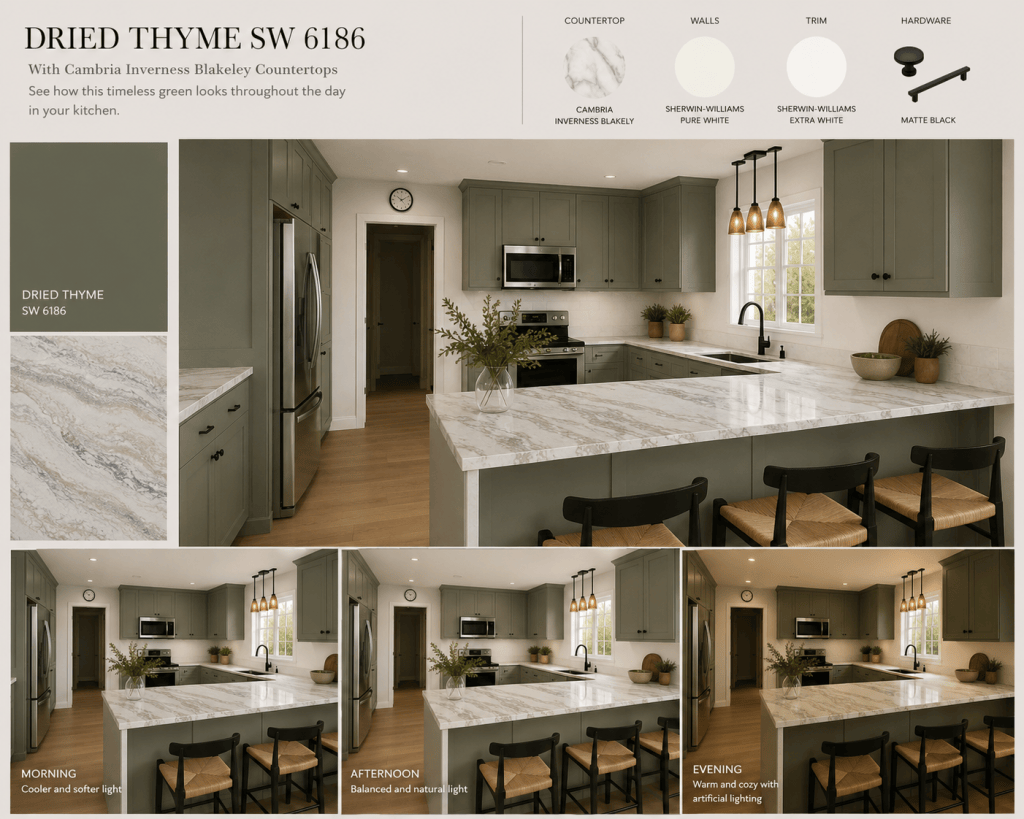
I liked it. Mark liked it so once again, we picked a paint color without ever buying a paint sample.
I also used ChatGPT to compare refrigerators and stoves, looking at prices, features, and differences between models. Of course, I still checked current prices, measurements, and manufacturer specifications before making decisions.
And then there was the shower curtain. I think this is my most favorite thing of all. We have a guest bathroom that sits smack dab at the end of a dark hall. If the door is open, you see the tub. We opted not to install a window in this bath so I knew the shower curtain, which is the first thing you see when looking down the hallway, needed to pretty spectacular or at least make me smile. So I asked myself, what makes me smile the most on a regular basis? And of course, it’s my pets.
So, I used ChatGPT to design a shower curtain featuring our cats! I uploaded different angles of Pete, Ernie and Little Man. I thought since they would be in bathroom it would be fun making it look like they were taking a bath.
Getting those little faces to look like our actual cats was a project all its own but after 5 attempts, including some tweaking to the overall design colors, and asking for Little Man to have a toy in his mouth, I think it turned out great. And the cats did a double take.
It was a fun project, and I ended up with something personal that I never would have found in a store. And all of this got me thinking.

(Poor Ernie looks cross-eyed but it’s just the wave in the curtain)
If AI could help me choose materials during a renovation, what else could it help me do?
How I Discovered My Decorating Style
Here’s something I think might help anyone who wants to try AI home design but doesn’t know where to begin.
You don’t have to know what your decorating style is called!
I certainly didn’t have a specific name for what I wanted.
I just knew what I liked.
So I went to Pinterest and other decorating websites and started saving pictures that caught my eye. I even saved pictures from Amazon and those pesky Facebook ads.
Rooms that felt comfortable. Furniture I liked. Colors, textures, and accessories that appealed to me.
I wasn’t necessarily looking for one particular style. I was just collecting pictures that made me think, Oh, I love that! or Doesn’t that look cozy?
Then I uploaded those pictures into ChatGPT and asked it to tell me what they had in common.
And that’s when things started coming together.
It helped me identify the combination of natural textures, warm colors, comfortable furniture, and organic elements that I kept gravitating toward.
A warm, modern organic look with some cottage and nature-inspired influences with a bit of Boho thrown in.
Suddenly, I had a way to describe what I wanted!
And that made everything else easier.
Instead of starting from scratch every time, I could tell ChatGPT the style I was going for and ask it to apply that look to another room.
My advice? Don’t worry about finding the perfect decorating label. Start by collecting pictures you love and let AI help you recognize the patterns.
You might be surprised by what you discover about your own taste.
AI Room Design: Where All the Brilliant Ideas Happen
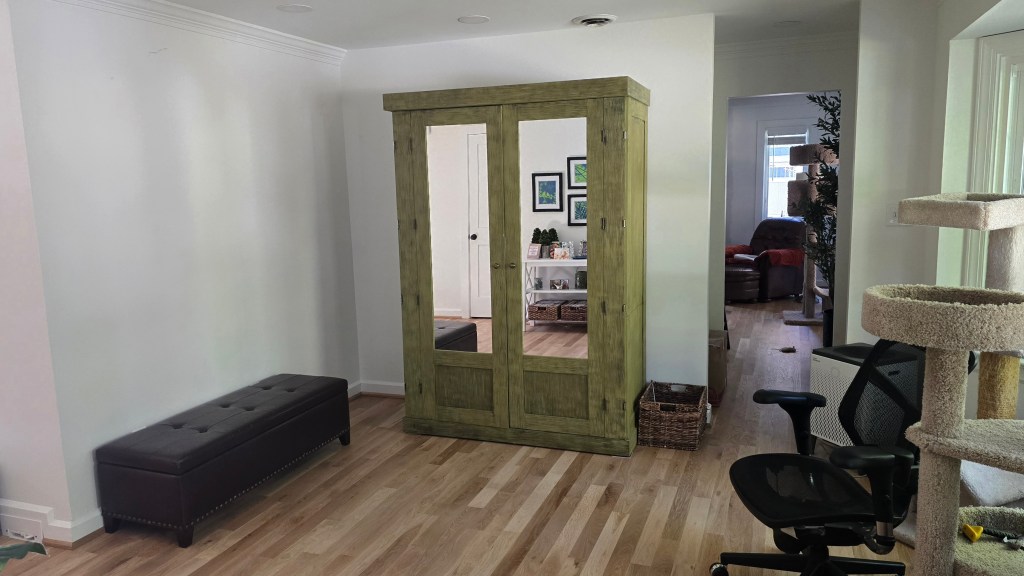
Let me introduce you to my office.
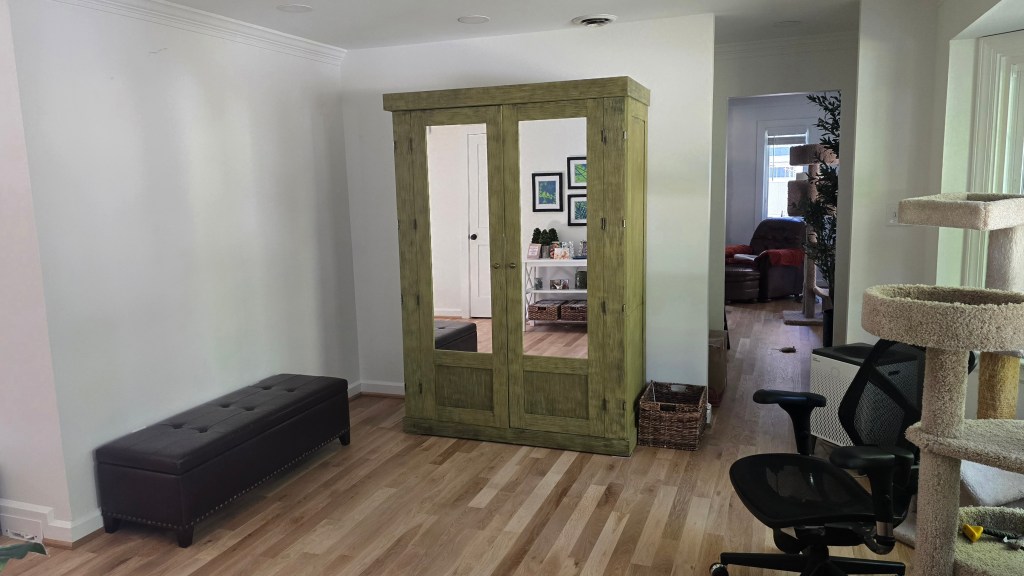
Now, you might look at the picture and wonder where my desk is.
It’s actually inside that big mirrored armoire!
That’s right. Behind those doors is where all the real estate transactions stay on track. It’s where I write this blog, and it’s where all the amazing ideas happen.
Well, most of them anyway.
Some of my best ideas arrive in the middle of the night when a cat decides that poking me in the face is a perfectly acceptable way to get my attention.
Apparently, 3 a.m. is an excellent time for interior design inspiration also.
Anyway, back to my office.
I wanted to make the room feel warmer, more comfortable, and more intentional. But I didn’t want to start replacing everything.
I already had the armoire, and since it’s my desk, it wasn’t going anywhere.
I also had a beautiful bay window area that, at the moment, was primarily being enjoyed by the cats.
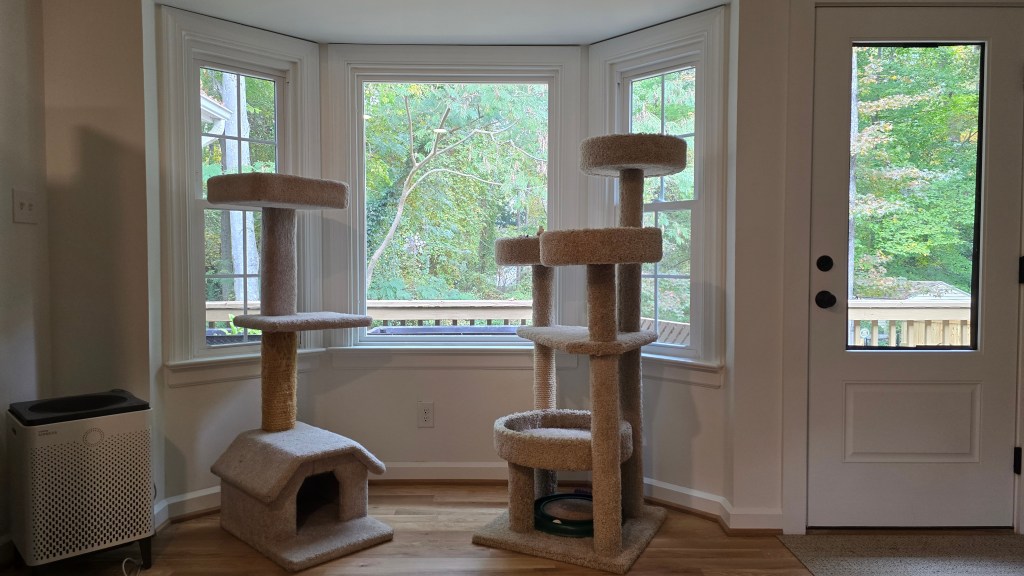
They have their towers. They have their view. And apparently, they consider the entire space theirs.
But I have other ideas!
One Picture, Lots of Possibilities
The first design was quite a transformation.
The armoire was darker, the walls had framed artwork, plants softened the corners, and the whole space felt warmer.
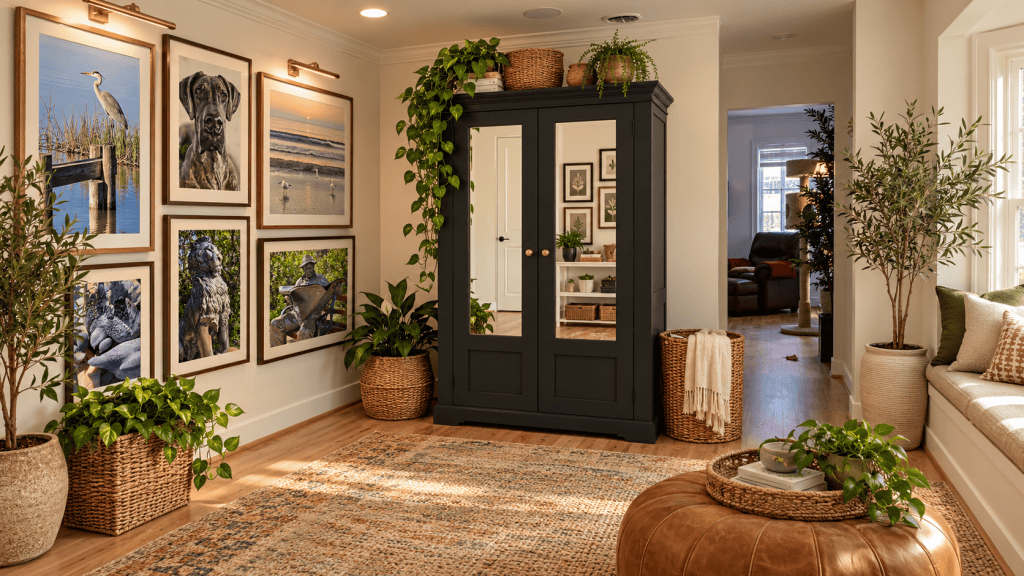
I loved seeing what the room could become but it was far too busy for my liking. I am a bit more of a minimalist but I’m truly trying to lean into the cottage look of our home and that includes a bit of “stuff”.
So I wasn’t finished. Actually, I was just getting started!
I began wondering what it would look like with a different arrangement of pictures and a little less busy.
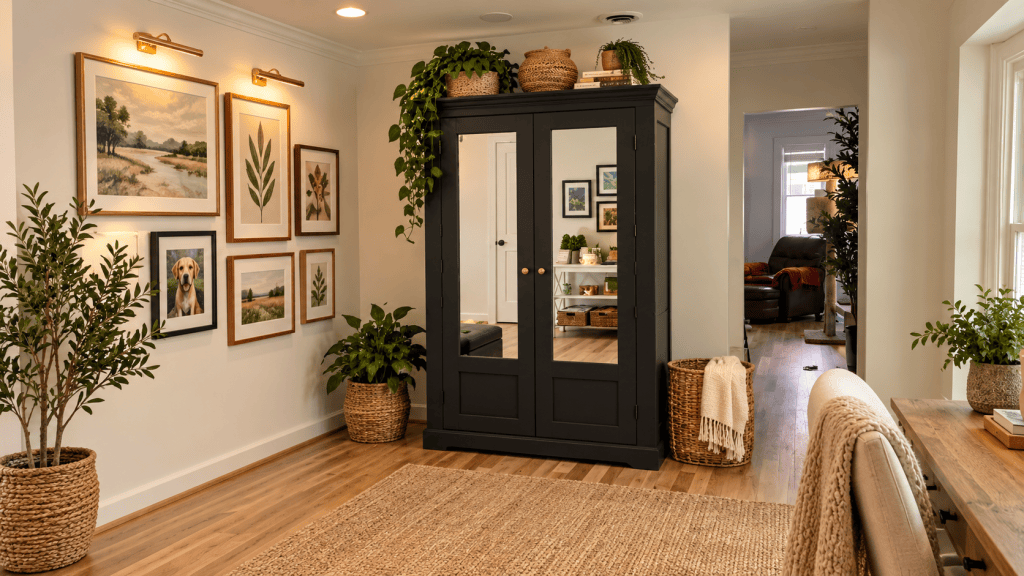
Or maybe a television that could display artwork.
Or a comfortable chair and a few more natural textures.
So I kept asking ChatGPT to make changes.
And that’s what I really love about this process.
You don’t have to know exactly what you want when you begin.
You can start with an overall idea, see what it looks like, and then narrow things down one decision at a time.
And unlike Mark, ChatGPT doesn’t seem to mind when I change my mind six times!
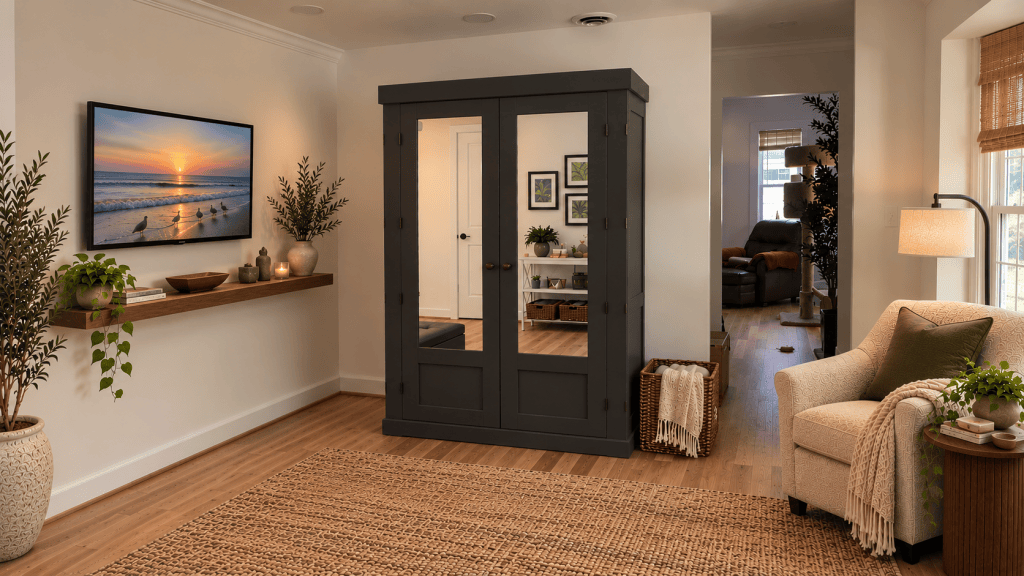
Below is the look I finally decided on. This design offers flexibility. I can listen to the TV while I’m working or use it to play exercise videos. I like the ledge for seasonal decor. It’s cozy but not cluttered. Adding a lamp might be a nice touch and I can envision some personal pictures on the far right of the wall. near the chair.
Finding a Cozy Spot for Me, Too!
Remember that bay window with the cat towers?
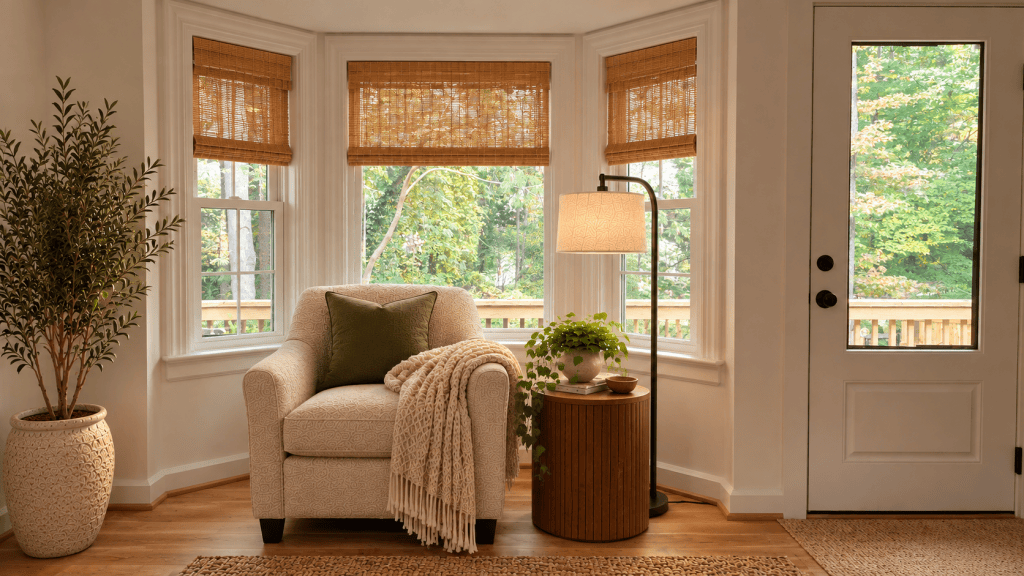
I wanted to see what it could look like as a cozy reading area.
So I uploaded the photograph and asked ChatGPT to show me a comfortable chair, a little table, a floor lamp, and window treatments that would work with the rest of the room.
What a difference!
Suddenly, I could imagine myself sitting there with a cup of tea and a good book, or watching a bit of TV before I start my day.
Of course, I’m fairly certain one of the cats would claim the chair before I ever got a chance to sit down.
And I could see how the bay window design would coordinate with the rest of my office.
That’s another thing I love about using AI this way.
You can work on one area of a room, then another, and keep asking it to make everything feel cohesive. I may never get around to buying that chair and table but it’s nice to know what the space could be. For now, it belongs to the cats.
From Decorating Ideas to a Shopping List
Once I started narrowing down what I liked, I asked ChatGPT to create a design board.
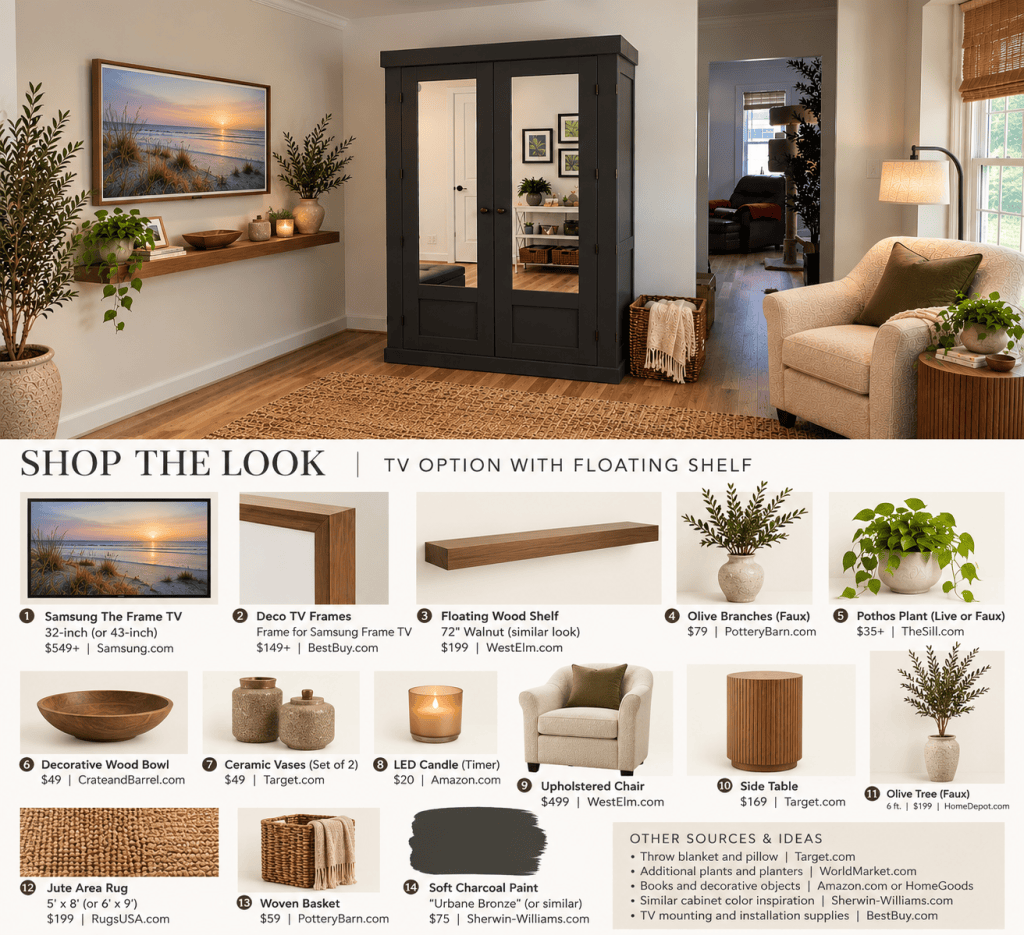
It showed me furniture, accessories, plants, lighting, rugs, and other pieces that could help create the look.
It even suggested places to shop and approximate prices.
Now, I wouldn’t recommend running out and buying everything on an AI-generated shopping board without checking it first. If you’re like me, you’ll want to touch, measure and yes, even smell the items you put in your home. Products, prices, and availability can change, and sometimes AI comes up with things that look wonderful but aren’t actually available.
But it gave me a really good starting point for what the room could become.
And because I could see everything together, it was easier to decide what I liked, what I didn’t, and what I might already have around the house or in the attic to contribute to the design.
Which is especially helpful when you’re renovating or decorating on a budget! Reusing belongings you already love is a big $$$ saver.
Want to Try AI Home Design? Here’s How to Get Started
You don’t have to be particularly tech-savvy to have some fun with this.
You just need a picture, an idea, and a little patience.
Here’s how I’d suggest getting started.
1. Find your style first
Go to Pinterest or browse decorating websites and save pictures of rooms you love.
Don’t worry about whether they’re traditional, modern, coastal, farmhouse, or something else. Don’t try to label the styles.
Just save what appeals to you.
Then upload several of those pictures into ChatGPT and ask:
“These are rooms I love. Can you tell me what decorating styles, colors, and design elements they have in common?”
That gives you a starting point and some useful words to describe the look you’re going for.
2. Take a picture of your room
Choose a room you’d like to change and take a clear photograph.
Then try asking:
“I’d like to redecorate this room. Based on the decorating style you identified from the inspiration photos I shared earlier, can you redesign this room to reflect that style? Feel free to suggest furniture, colors, accessories, and other details that will bring the look together.”
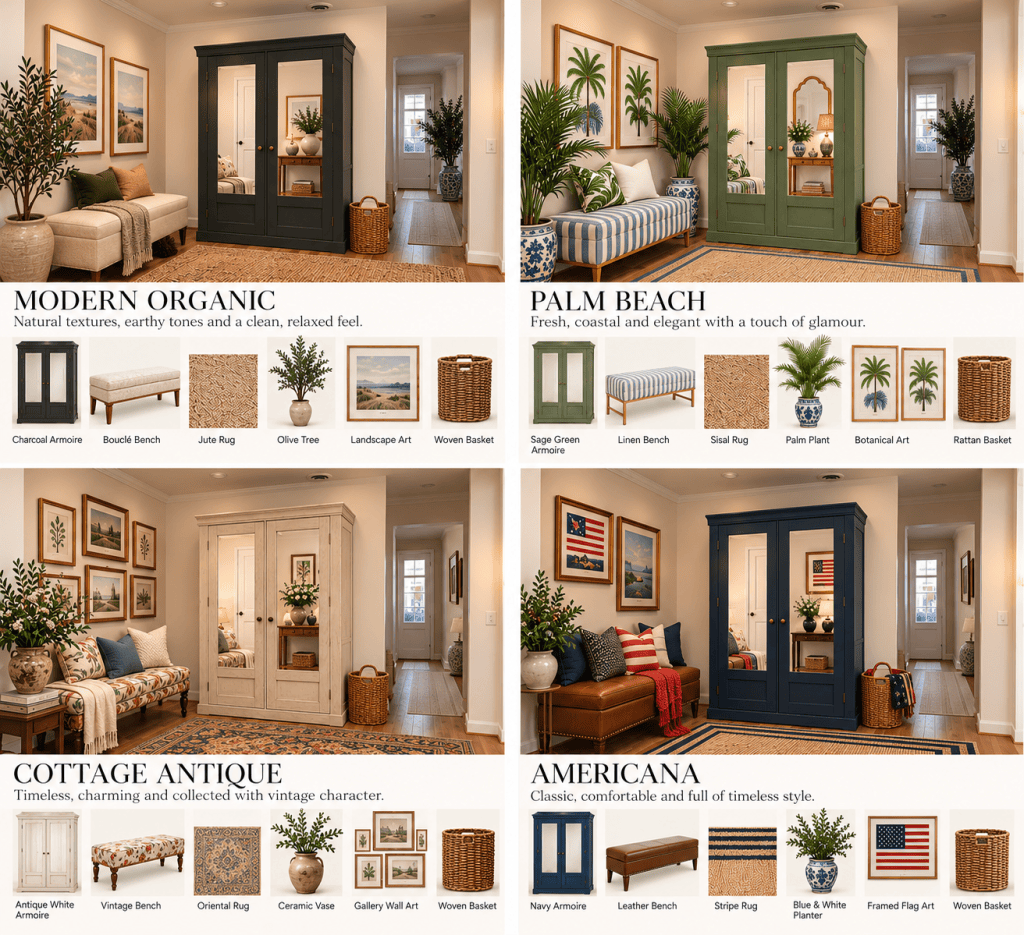
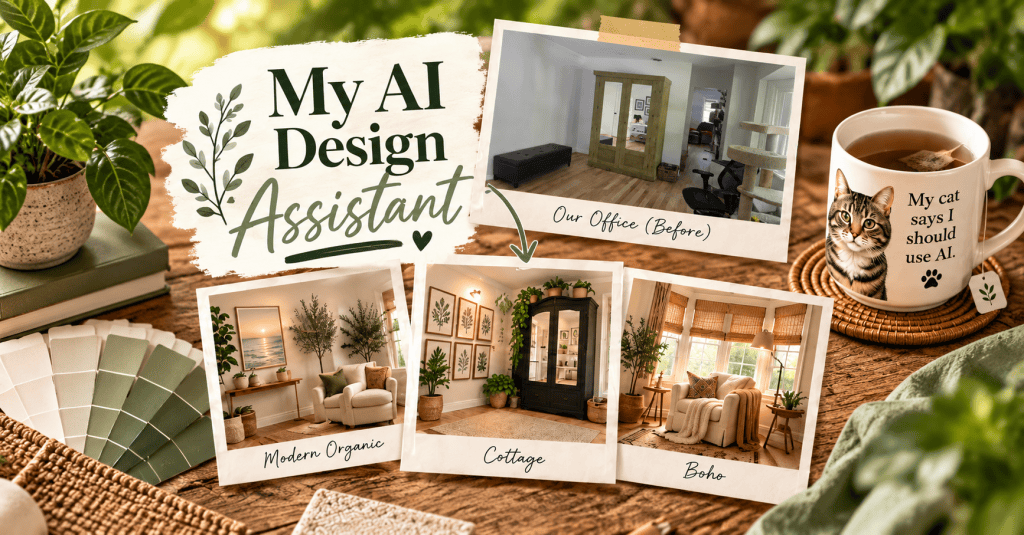
I did this below using a similar prompt and offering several styles as an example – “Chat, would you please create a design board using my armoire and show me a warm, modern organic style, a cottage antique style, a Palm Beach style and an Americana style to create a new look for my office.”
This was the design board it came up with for my office using the prompt above.
3. Tell ChatGPT what you want to keep
Maybe you’re keeping your furniture, flooring, or window treatments.
Tell ChatGPT what’s staying.
For example:
“Please keep my existing armoire and flooring, but show me how I could change the look with artwork, lighting, and accessories.”
This is especially helpful if you’re working with a budget.
And if ChatGPT changes something you told it to keep, just tell it to put it back!
Believe me, it happens.
4. Make changes one at a time
Once you see something you like, start narrowing it down.
Try asking:
“I like this design, but can you show me a different arrangement for the artwork?”
Or:
“Could you make the room feel a little warmer without changing the furniture?”
Or:
“Keep everything else the same, but show me a different chair.”
You don’t have to start over every time you change your mind.
That’s how I worked through my office designs.
5. Upload your own artwork and photographs
This is one of my favorite possibilities!
Take pictures of the artwork or framed photographs you already have.
Upload them and ask ChatGPT to arrange them on a particular wall.
You could say:
“Here are six framed pictures I already own. Can you show me three different ways to arrange them on this wall?”
You can also ask it to suggest frame colors or spacing.
Just be sure to measure the wall and the frames before you start hanging anything. Also, asking ChatGPT to make it to scale is helpful.
6. Ask for a design board
Once you find a look you like, ask ChatGPT to put together a design board with the furniture, lighting, artwork, and accessories.
You can even ask it to suggest less expensive alternatives.
Just remember to verify products, prices, dimensions, and availability before making purchases.
And don’t be afraid to tell it when you don’t like something!
A Helpful Tool, Not a Replacement for People
I certainly don’t think AI will ever replace the creativity and experience of a talented interior designer. It hasn’t traveled the world or experienced what it feels like to sit in your favorite coffee shop. It can pull in looks but only you will know if it gives you the feeling you are longing for.
And when you’re dealing with construction, electrical work, plumbing, or anything requiring professional expertise, you still need the right people.
Not everyone has the budget to hire a designer for every decision. We didn’t and since I was comfortable using AI for some design decisions, it only made sense to save money.
And if you’ve ever renovated a house, you know that the money you thought you might have left over for decorating has a funny way of disappearing.
Maybe your renovation takes longer than expected and you suddenly find yourself paying for an Airbnb (more on that later).
Or maybe one of your cats decides it’s the perfect time to need an unexpected surgery or two.
And maybe once you pull up all the flooring to install those pretty new white oak floors, you find you need to replace all the subflooring.
Believe me, life has a way of rearranging the budget!
Mark and I have always been big believers in doing things ourselves whenever we can. Not because we don’t appreciate the professionals who do this for a living, but because sometimes the budget just doesn’t stretch that far.
And sometimes we simply enjoy the challenge.
For me, AI has been a surprisingly useful tool.
It helped during our renovation when I was choosing wall colors, cabinet colors, and tile.
Now I’m using it to help me figure out how to decorate our home going forward, from arranging artwork and choosing accessories to experimenting with seasonal decorations.
And eventually, I’m planning to use it to help me explore landscaping ideas for the front and side yards. I’m sure Mark will be delighted to hear that!
Of course, AI isn’t perfect. Sometimes it gets things wrong. Sometimes it changes something you specifically asked it to leave alone. And sometimes you have to explain the same thing three different ways.
But when you’re willing to experiment a little, it can open up a whole world of possibilities.
And the best part?
You can change your mind as many times as you want without spending a dime on the actual decorating!
So here’s my challenge to you.
Pick a room in your house. Take a picture. Think about how you’d like it to feel.
Then give ChatGPT a try.
You might just surprise yourself!
And if you come up with something wonderful, I’d love to hear about it – or see a picture of it.
As for me, I still have plenty of rooms to decorate, a front yard to landscape, and more ideas than Mark probably wants to know about.
And if I run out of ideas, I’m sure one of the cats will wake me up at 3 a.m. with another one!
Until next time…
Lisa
Lisa & Mark Adams
Mark Adams & Associates
eXp Realty
office@markadamsteam.com
804-237-8585
Realtors by Day, Dog Lovers 24/7








Leave a Reply