It Started With a Timeline

Once our house was ready for the market, the next challenge was figuring out selling and buying at almost the same time and somehow making the timing work.
It seems like a juggling act but fortunately, we had a plan.
Before putting our house on the market, we met with the owner of the home we wanted to buy, and she agreed to sell it to us.
She wasn’t planning to move until the end of March, which gave us about 6 weeks to prepare our house for sale – whew! We had plenty of time…or did we? We set March 27th as our target date to put our home on the market.
Everything we talked about in our last post, the cleaning, decluttering, painting, exterior work, driveway paving and all those finishing touches, had to be completed before then.
Mark needed to clean out his 3-car garage workshop. I was in charge of the inside of the home.
We rented a storage unit for Mark’s workshop and everything we packed was moved out of the house. Only the essentials of making our home a warm and inviting space were left.
Once the house went on the market, we wanted to make it as easy as possible for buyers to see it.
That meant getting ourselves out of the way.
And when I say ourselves, I mean all of us, including the pets.
We rented a pet-friendly Airbnb for four days so buyers and their agents could schedule showings without having to work around us. More on renting the right Airbnb in the future. I’m going to title that post “The Good, The Bad, and The Horrifying”.
For those four days, the house belonged to our Richmond real estate market.
And Suddenly I Was Just Another Seller
We’ve spent years helping sellers through this process, so I know exactly what to expect when a house goes on the market.
Apparently, knowing what to expect and actually experiencing it are two very different things.
The minute our house was listed, I became just like every other seller. Mark was still his calm, cool and collected self but not me.
Every time a showing was scheduled, I was watching.
Every time one was canceled, I wondered why.
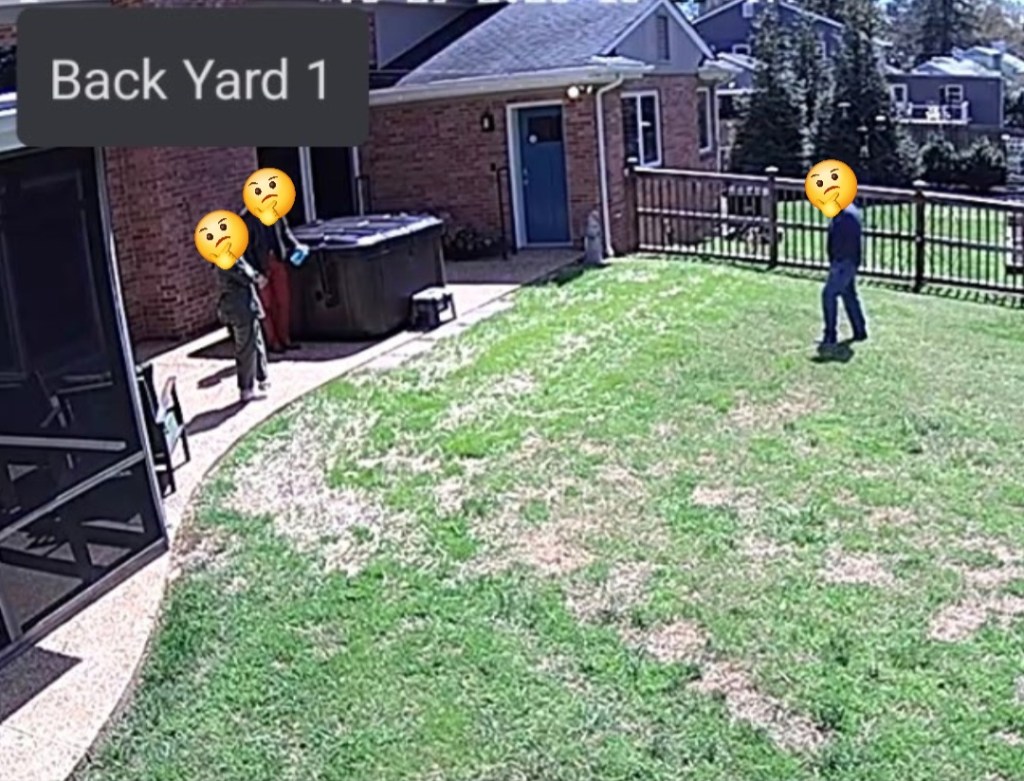
I checked our security cameras (only outside cameras for us – no sneaky indoor devices) to see when buyers arrived, how long they stayed and when they left.
Then we waited for the feedback.
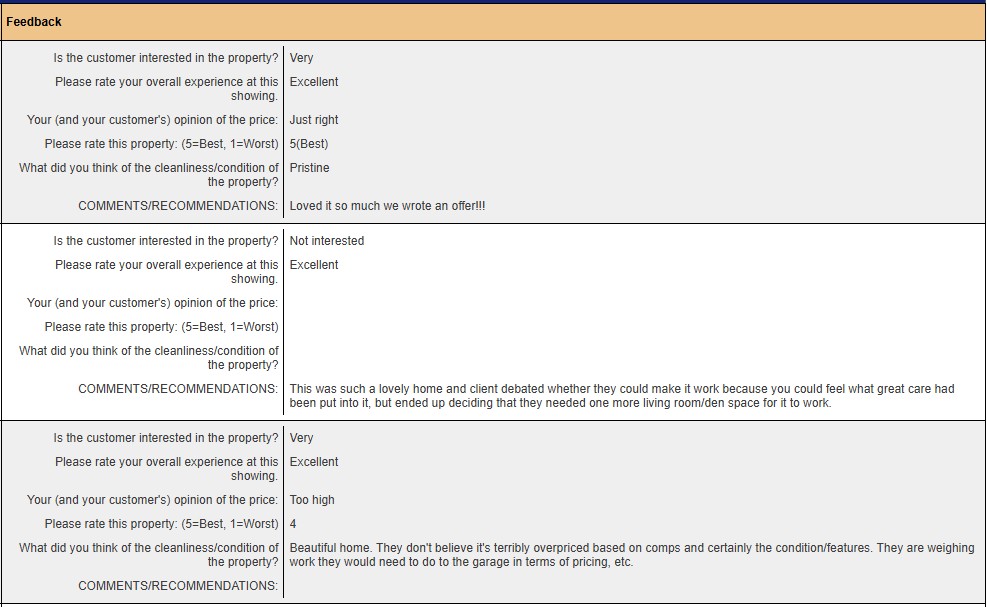
Did they like it? What didn’t they like? Were they interested? Would they come back?
I knew better than to read too much into any of it, but that didn’t stop me from doing exactly that. (real feedback from our showings below)
Meanwhile, I was driving about 40 minutes each way daily from our Airbnb back to the house to make sure agents had locked the doors and turned off the lights after showings. And yes, there were times when they hadn’t and just like any seller, I fussed A LOT!
Then the neighbors started asking whether we’d had any interest, which, of course, made me think about it even more.
It didn’t matter that we did this for a living or that we’d helped sellers through these same emotions countless times.
When it’s your home, it’s personal.
For those four days, every showing, cancellation and piece of feedback mattered to me.
I wasn’t “in the business” anymore. I was the seller, just like every other seller.
Fortunately, all that watching, waiting and worrying had a good ending.
By the end of those four days, we had two offers, and both were above our asking price. So much for the feedback that said it was overpriced. We actually priced it slightly lower than the comps so that we might receive a higher than expected offer…and it worked.
Now it was time to stop thinking like emotional sellers and start negotiating the way we would for one of our clients.
The Highest Offer Isn’t Always the Best Offer
Our two offers were very different.
One was a cash offer and a good deal over asking price.
The other buyer was obtaining a loan, but their offer was considerably higher than the cash offer. They were also well qualified, which gave us confidence in their ability to obtain financing and get to closing.
Cash can certainly be attractive to a seller. There is no financing contingency to worry about, and in some situations that can reduce the risk of the transaction.
But cash doesn’t automatically make an offer better.
We looked at the entire package.
Both buyers were offering more than our asking price, but the financed offer was considerably higher. The buyers were well qualified, and they were also willing to give us another term that was extremely important to us – a free six-week rent back.
We chose the higher financed offer.
There was some additional risk compared with accepting cash, but we felt comfortable taking that risk based on the buyers’ qualifications and the overall strength of their offer.
We Negotiated for What We Actually Needed
This was the point where being Realtors became helpful again.
During the showings, I had been every bit the anxious seller.
Once we had offers in front of us, we tried to take the emotion back out of the process.
We approached the negotiations much the same way we would if we were representing one of our clients.
What was most important to us? Where did we have leverage?
Which terms had real value? Where were we willing to take some risk?
And what did we need to make the next part of our move work?
Of course we wanted the best price we could reasonably negotiate.
But we also needed time.
The six-week rent back was a major part of our plan because we needed those weeks to renovate the new house before moving in.
So instead of looking at the offers based solely on whether they were cash or financed, we negotiated around the complete package.
Price mattered. Terms mattered. Timing mattered. And the strength of the buyer mattered.
That’s something we talk about with our sellers all the time.
The best offer isn’t necessarily the one with the highest price or the word “cash” written on it.
It’s the offer that provides the best combination of price, terms, qualifications and likelihood of actually getting to closing.
For us, the higher financed offer combined with the free six-week rent back best accomplished what we needed.
What is a Rent Back Exactly?
A rent back allows a seller to close on the sale of their home but remain in the property for an agreed period of time after closing.
The buyer owns the house, but the seller temporarily remains in possession.
The exact terms are negotiated between the buyer and seller and can vary quite a bit.
Typically, there may be a security or damage deposit held in escrow by the closing attorney or settlement agent. There may also be a daily occupancy fee.
Depending on how the agreement is structured, that fee may take into consideration some or all of the buyer’s daily ownership costs, including principal, interest, taxes and insurance.
The agreement should also establish exactly when the seller must leave the property and what happens if they don’t leave on time.
Like most parts of a real estate transaction, the terms can vary, so both sides need to understand exactly what they’ve agreed to.
The Rent Back We Negotiated
In our case, we were able to negotiate six weeks in our home at no charge.
We provided a damage deposit that was held by the buyer’s attorney, but we didn’t have to pay a daily occupancy fee.
That was extremely valuable to us.
Our plan was to close on our Sleepy Hollow property first and close on the new house the following day.
Then we’d remain in our existing home for six weeks while contractors worked on the new house.
The plan looked pretty simple:
Sell our house.
Obtain renter’s insurance to cover our valuables while we lived in our old house.
Buy the new house the next day.
Stay in our existing home for six weeks.
Renovate the new house.
Move once.
For us, the rent back wasn’t just a nice contract term. It was what made our entire timeline possible.
Sometimes the Terms Matter as Much as the Price
Our experience reinforced something we regularly tell sellers.
For us, six weeks of additional possession gave us something we desperately needed.
Time. Also, we had 6 weeks of living rent-free in our current home. More money to put into the renovation.
For another seller, the priority might be a particular closing date, fewer contingencies, stronger financing, a larger deposit or something entirely different.
Your priorities should help drive the negotiation but be reasonable. Negotiations are a two-way street.
That’s why understanding what you need before the offers arrive can be so important.
Six Weeks Sounded Like Plenty of Time
At this point, we felt pretty good about ourselves.
We had prepared the house.
We had buyers.
We had negotiated a strong above-asking price and six weeks to stay in our home for free.
We knew when we were buying the next house.
And we had six weeks to renovate before moving in.
The Property Brothers do it all the time. Obviously, so could we.
What could possibly go wrong?
As it turns out, quite a bit.
But first, we had another problem to solve.
We were moving into a house that was about 700 square feet smaller.
Everything wasn’t going to fit.
We also had a shed that needed to be moved.
And a hot tub.
On top of that, the new house was about to become a construction zone, so we couldn’t simply move everything we owned from one house directly into the other.
That’s how we ended up with two separate storage units, a shed that needed its own moving plan, a hot tub that wasn’t exactly going to fit in the back of a pickup truck, and a move that was quickly becoming more complicated than we anticipated.
That’s where we’ll pick up next.
Until then…
Lisa & Mark Adams
Mark Adams & Associates
eXp Realty
office@markadamsteam.com
804-237-8585







Leave a Reply